What Open Source Maintainers Should Know About Mental Health
Interviewed by debug:mind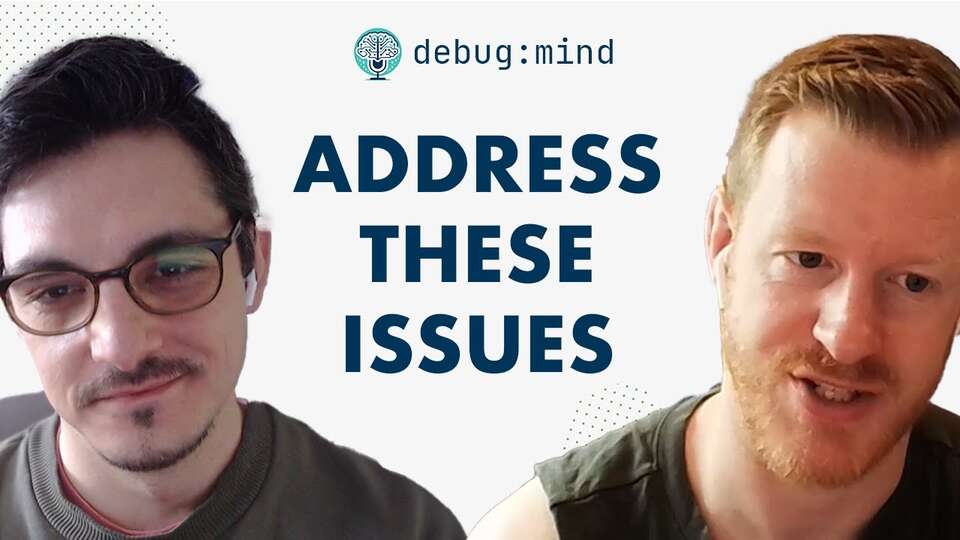
In this special episode of “debug:mind”, I chat with Mike McQuaid, a leading figure in the open-source community and co-founder of Workbrew.
https://www.youtube.com/watch?v=idMaINdubk8
Show transcript
- 0:00 Welcome to The Bug Mind, audio only edition.
- 0:03 I'm Lorenzo, and you may know me as Calcet, and I'm your host.
- 0:07 I've worked many years in open source and have been seeing a therapist for almost as long.
- 0:11 In The Bug Mind, I talk with other people in tech about their own mental health stories,
- 0:16 hoping that sharing our experiences can help you deal with your own challenges.
- 0:20 Get ready, we're diving deep.
- 0:23 Hey Mike, it's great to have you here. Welcome.
- 0:28 Thanks for having me.
- 0:30 Yeah, I'm so happy that you're here.
- 0:33 You're literally one of my personal heroes when it comes to open source,
- 0:37 so I'm super grateful that you've decided to do this with me.
- 0:40 Before we dive into deep, because I'm already so excited,
- 0:44 can you tell us a bit more about what you do in tech for someone that doesn't know who you are,
- 0:50 which probably are very few people, but just for them. For my mom, probably.
- 0:54 Sure thing. So I guess I'll maybe start with what I'm doing right now and then work backwards.
- 1:00 So right now I am CTO and co-founder of a startup called Workbrew,
- 1:04 who is doing kind of commercialization in the homebrew space.
- 1:08 What our product offering is right now is providing MDM support, commercial enterprise level support and general kind of features that kind of big companies need around using homebrew.
- 1:20 If you know what homebrew is already, then great.
- 1:23 If you don't, it's an open source package manager for predominantly macOS, but also for Linux.
- 1:28 I've worked on homebrew for 15 years.
- 1:30 I'm the project leader, which means, I guess, kind of tech lead and figurehead in some ways, but it's also an elected position.
- 1:37 And I am also, I guess, I've worked as a maintainer doing bits and pieces on homebrew for that entire time.
- 1:45 And homebrew was 15 earlier this week.
- 1:48 So it's a nice little celebration.
- 1:51 Happy birthday, homebrew.
- 1:52 Yeah, happy birthday to homebrew.
- 1:53 So before I was working at Workbrew, I worked at GitHub for 10 years, where I left as a principal engineer.
- 2:00 I worked on all sorts of things.
- 2:02 Like I built the archiving repos feature.
- 2:04 That was my kind of idea.
- 2:05 And then the GitHub sponsors worked on that, the merge queue, all sorts of like little bits and pieces over the years.
- 2:12 Before that, worked at a few other kind of random startups and companies and stuff and did the kind of, you know, I guess, most stereotypical slash traditional route into tech of doing a computer science.
- 2:22 And business degree back in the day.
- 2:24 Awesome.
- 2:26 And, you know, you mentioned being an open source maintainer.
- 2:30 And this is what we want to talk about today.
- 2:32 We're both open source maintainers.
- 2:34 This month is May, as you were saying earlier.
- 2:37 And it's both Mental Health Month, Mental Health Awareness Month, and GitHub's maintainers month.
- 2:44 So it felt like a nice coincidence to have these two months collide and have the two of us talking about, you know, not only our experience in open source, but also like the mental health aspect of it.
- 2:57 Because I think that open source maintainers in particular, like they're very prone to burnout.
- 3:04 They're very prone to isolation.
- 3:06 And, you know, I think we've both had our fair share of experiences that have been stressful or, you know, challenging.
- 3:15 And I would love for people to basically, you know, learn from our experience and create for themselves maybe an healthier approach towards open source.
- 3:26 And, you know, that's actually where I wanted to start about.
- 3:32 So let's say you would start today doing open source, right, with your previous experiences, but like everything else is like the real world doesn't know about it.
- 3:43 You're kind of like reincarnated in a younger version of you.
- 3:45 Like, how would you set up your relationship to open source?
- 3:49 That's a great question.
- 3:50 I think the main thing I would say is boundaries.
- 3:54 So the boundaries are kind of all over the place.
- 3:57 So some of it's boundaries with myself, some of it's boundaries with other people, some of it's boundaries with work, all that type of thing.
- 4:04 But I guess I might spell out some specifics of what that might look like.
- 4:08 So nowadays, what I have is all my Homebrew GitHub notifications, for example, go to a separate email account, which is, you know, my mikeatbrew.sh address.
- 4:20 And what that means for me is I can check them separately.
- 4:24 I can add or remove them to my phone.
- 4:27 I can add or remove them to any computer or device.
- 4:29 Separately, I can log in.
- 4:31 And I have that separation between what's going on in my kind of day-to-day, what's going on in my work, and what's going on in Homebrew stuff.
- 4:39 So, for example, I don't have Homebrew emails on my phone.
- 4:41 Similarly with Slack.
- 4:43 Homebrew has a Slack for maintainers to talk with each other.
- 4:46 I don't have that on my phone either, unless I'm going on, like, a trip where I'm with Homebrew maintainers all the time and all that type of stuff.
- 4:53 So, basically, what this ends up meaning is I can be a lot more intentional about the time I spend and when I'm almost, like, ready for that energy in my life and thinking about Homebrew stuff, getting involved with Homebrew stuff, replying to Homebrew stuff.
- 5:08 And in my case, it's kind of in more of a leadership role nowadays than I necessarily always have been.
- 5:15 It also gives other people space to be, like, if someone's like, oh, this is on fire, then it's not like Mike jumps in straight away and fixes it.
- 5:23 You know, sometimes, depending on when you ask, depending on the week, it may be if you ask that at 5.31 p.m. on a Friday, then Mike is not going to respond until 8.30 a.m. or later on a Monday, even on, like, almost like a normal working week, because I want to spend my weekend with my wife and kids and all that type of stuff.
- 5:46 And I think it's a very strong strategy, like, creating this separation.
- 5:53 It's basically the same.
- 5:54 I do a similar thing for React Native.
- 5:56 Basically, I'm even, in a way, more extreme when it comes to email.
- 6:00 Like, I literally have disabled GitHub sending me emails of any shape or form.
- 6:05 So, in that sense, like, what I do is I'm very intentional, like, subscribing to certain issues, subscribing to certain repositories.
- 6:14 And, you know, like, I only interact with GitHub when I'm on GitHub.
- 6:19 So, there is that, you know, step of intentionality that you create.
- 6:24 Like, oh, I'm not passively receiving everything constantly, but I'm like, okay, if now I have time to, you know, spend an hour looking at through GitHub notifications and replying to people, I'm going to open GitHub, and that's the time where I'm going to do that, right?
- 6:40 So, I think that's super important in general.
- 6:43 And it's also, in the broader mental health community, there's these, like, the theory of the spoons, in a way.
- 6:53 Have you heard of it?
- 6:54 Yeah.
- 6:55 Yeah, it's basically that, right?
- 6:57 You have a certain set of spoons that you can use every day for your tasks.
- 7:02 So, acknowledging yourself, you know, you're like, okay, today I have only three spoons, today I have seven spoons.
- 7:09 Like, knowing, like, that you, your battery has a limit, and be like, okay, being intentional, I'm going to use two spoons for GitHub today.
- 7:17 It's, I think it's one of the, yeah, it's a very healthy strategy, I find.
- 7:22 And, why do you think it's necessary?
- 7:27 Like, kind of like, you know, flipping the question on its head, like, what's going on in open source for maybe someone that is not as involved as, like, that, you know, you kind of need to create these.
- 7:38 You kind of need to create this healthier relationship.
- 7:41 Yeah.
- 7:43 So, I think it's, for me, again, like, my patterns with open source have somewhat mirrored my patterns with work.
- 7:53 They've been maybe slightly kind of time lagged compared to my patterns with work.
- 7:56 But, you know, when I was young and enthusiastic and working for a kind of working all hours startup, which is not, you know, I work hard right now on my startup, but I'm not working as many hours as I did when I was 25, because I have other commitments.
- 8:11 But there was that sense of being switched on and being engaged 24-7 and being responsive 24-7 and that being a desirable thing that resulted in better quality software and, you know, more whatever, like, for employees or employers or whatever.
- 8:29 Whereas, I think I realized on the work side first that, like, I actually think that results in, in the long term, like, worse software, worse teams, worse happiness for everyone involved compared to if you separate things.
- 8:43 And I like that one used before, intentionality.
- 8:44 I feel like that's a really big thing where it's just important to kind of think about when you're spending that time and energy.
- 8:50 So, for me, from, you know, a relatively early stage at GitHub, when I worked there, I'm based in Scotland, and most of my coworkers, most of the time I was at GitHub, were in the US.
- 9:03 So, what would happen is if I just had Slack on my phone, then my evening would just be ping, ping, ping, ping, ping, ping, right?
- 9:09 So, Slack was the first to go, and then, particularly because once I was on on-call rotations, it's like, well, if someone really needs me, they can page me, right?
- 9:16 So, it's, if it's critical, I'll do it that way.
- 9:20 And then, you know, email went similarly that I didn't put work email on my phone unless I was on a work trip or whatever, and frankly, I just, like, wanted the distraction because I was away from my family and stuff.
- 9:29 But open source kind of maybe took a little bit longer for me to internalize the same attitudes, but I do actually think in lots of ways,
- 9:39 frankly, almost everyone would be better probably making open source a bit more like work.
- 9:44 I mean, for some people, maybe yourself, Lorenzo, I'm actually not sure right now, like,
- 9:49 like React Native is maybe a big part of or your primary day job purpose, right?
- 9:56 If you're an open source person in that situation, I think you should treat it 100% as work, right?
- 10:01 And evenings and weekends and holidays and whatever, you should entirely disconnect as most people would agree would be sensible for work.
- 10:08 I think people find that harder when they're doing open source because there's less of an expectation there.
- 10:13 But I think even if you're a volunteer or a hobbyist, I think it's still valuable to almost be like, right, I work on this, you know, 9 to 5 on Friday or whatever it may be, right?
- 10:23 That's, I appreciate that's harder for people whose employers maybe say, right, you cannot spend even two minutes on open source during your work day.
- 10:32 But again, I would, in my case, I probably had at most a couple of years at GitHub where it was deemed officially acceptable for me to spend any time on homebrew.
- 10:48 And I probably had a couple of months every three or four years where I worked on a homebrew related project.
- 10:55 But the rest of that time, it was like, you know, essentially, as long as I'm getting my work done, no one cares.
- 11:03 But equally, if I, if they were aware quite how much time I spent on homebrew during working hours, someone would probably be like, hey, like, that's too much.
- 11:11 But I got my work done.
- 11:13 I got good performance reviews.
- 11:14 So ultimately, that's not their problem.
- 11:17 And it's easier for me to balance things that way.
- 11:20 Things are a bit more blurred now because I'm doing a startup that is directly attached to homebrew, which involves, you know, sometimes building homebrew features for my day job, effectively.
- 11:31 But even before that, like, even in GitHub, I was probably doing the majority of my homebrew stuff is like within working hours in a working capacity.
- 11:40 And I also even think like open source, again, in terms of boundaries, like open source interpersonal relationships can sometimes be quite, I guess, non-work.
- 11:52 Like, you know, either work in appropriate conversation, either people speaking to each other in a way that would get one of them fired in a workplace, like people being unreasonable, unwilling and unable to do things that would be a very basic expectation of a junior engineer in a workspace, a workplace even.
- 12:10 And I think all of this stuff, you know, it's, it has its place.
- 12:15 And for some people, sometimes it makes open source better.
- 12:18 But I'm not convinced that actually, you know, certainly if you're a project at like homebrew's level of scale, I think indulging people who want to behave in a way that would get them almost instantly fired in most workplaces is not a good idea.
- 12:31 Like you shouldn't, like that people have the freedom to decide to when to show up, what to do, what not to do on an open source project.
- 12:39 I'm the leader of homebrew, but I can't make anyone do anything on the project.
- 12:43 I can sort of stop people doing things, but I can't make people do things.
- 12:48 And to me, like that's, that's the side that makes it better and more enjoyable than work.
- 12:53 Like, it shouldn't be that we're like, oh, well, we can all do whatever and behave in kind of very weird, inappropriate ways.
- 13:00 Not saying this is the case in homebrew, but has been some isolated cases in the past where there has been that.
- 13:05 And it's taken me too long to be like, hey, actually, you know what, like this wouldn't be acceptable in a workplace.
- 13:09 It's not acceptable here.
- 13:10 Like change it or move on.
- 13:12 Yeah.
- 13:13 There's so much to unpacking what you just said.
- 13:16 I think I want to try to separate a few threads.
- 13:20 So first off, so yes, at the moment, I think that like your current role and my current role at Microsoft mirror each other quite well in the sense that the project that we help maintain in the open source and that started as something separate from work has become an intrinsic part of our work.
- 13:38 And if I were to give someone as a suggestion, I would say that's probably one of the healthier ways to approach open source that you were saying, because at that point it's like, okay, this is work.
- 13:48 When I'm not working, I'm not connected to that.
- 13:52 And that feeds into the second thing that you kind of like mentioned, which is like open source by its inherent nature.
- 13:58 It's kind of like on 24 seven, you know, when you're maybe, you know, you're in Scotland, it means that maybe during the time you're sleeping, someone is using homebrew in some other parts of the world and they're opening an issue.
- 14:11 And maybe it's something urgent and important for them, but you're, you know, in Scotland, you're sleeping, it's the middle of the night.
- 14:17 So having this aspect of the open source being always up, always running, always someone doing something, I think that that's like one of the traps that a lot of people fall into.
- 14:30 Because like, well, I just received this email, it's like, you know, 11pm, but this person really needs my help.
- 14:36 Sometimes people just like feel this overwhelming sense of responsibility, which is where like, you know, having boundaries, I think it's very important.
- 14:48 And kind of going down this route for a second, um, and mentioning what is probably like the most, uh, the most impactful blog post I've read in many years.
- 15:00 I wanted to touch a second on, you know, one of the articles you wrote, I think in 2017 or even earlier than that, which was called, um, maintainers owe you nothing.
- 15:11 Like, uh, to quickly give a backstory, I was just starting out as a maintainer.
- 15:16 I was like, um, yeah, 2017 around then.
- 15:19 And basically I started, I, it wasn't part of my daily job.
- 15:23 So I was doing it on the side and I was doing it a lot, like many, many hours every weekend.
- 15:28 And in less than three months, I basically burned out.
- 15:31 And then I found your blog post that basically says, well, you know, like it's open source and open source project.
- 15:37 I'll have a license and this license says the software is provided as is, uh, without warranty guarantees, et cetera, et cetera.
- 15:44 And, you know, you through that blog post explaining that that's kind of the contract that you create with your consumers.
- 15:52 Um, like that should set your expectations for yourself and also for your community to kind of like, if you use it, it's not my responsibility, how it goes.
- 16:05 And yeah, I don't know.
- 16:07 I, I still think that's one of the most important things that all the maintainers should learn.
- 16:11 Uh, how did you, what, let's start from the beginning.
- 16:16 How did you decide to write that?
- 16:17 What motivated you to go there?
- 16:20 Uh, I can't quite remember.
- 16:23 I think it was, I mean, obviously I'd been involved with Homebrew for a while at that point.
- 16:28 And I'd had a bunch of conversations with maintainers kind of over the years and I realized that I guess at this point I'd been working on Homebrew for five plus years.
- 16:41 And in contrast to many of the people around me in Homebrew and many other projects, I had never burned out, right?
- 16:48 Like I had never both in the perspective of like, and I still say that today, but I I've had 15 years.
- 16:54 I've never burned out of Homebrew.
- 16:55 I have there been times when Homebrew has been more enjoyable and less enjoyable for sure.
- 17:00 But probably in 15 years, I don't think there has been a, a month in which I've not done something related to Homebrew in that time.
- 17:08 Um, and, and also I, but the thing is, I've not felt the obligation either to do that.
- 17:16 Like I've, I've done it and I've continued to do it and I continue to do it because I want to and because I enjoy it.
- 17:22 And I also interesting, I didn't realize this at the time, but if you, uh, if you Google my name, you find my website and stuff like that.
- 17:31 But if you Google Mike McQuaid asshole, uh, you will find various people on, uh, mainly Reddit, I think.
- 17:38 But I think, you know, there's a couple of people in Hacker News who don't, oh no, exactly.
- 17:42 Well, I think, I think there's an important point in that though.
- 17:45 Cause I think what is interesting is that, um, you, what you need to set yourself up for expectations wise, and this is a good, maybe lesson for life, not just open source is that if you have healthy boundaries and if you are doing things like, as I say, want to be an open source maintainer, working on the same project for 15 years and not get burned out.
- 18:06 Some people are not going to like that, right?
- 18:08 Some people are going to call you an asshole.
- 18:09 Some people are going to call you selfish.
- 18:11 Some people are going to call you the one who's entitled or lazy or a bad engineer or whatever it may be.
- 18:17 But the thing is, is that that those two things go together.
- 18:22 And if you are chasing people's praise, then you are going to be the one who, as you say, is answering the email at 11 o'clock at night.
- 18:32 The issue, this person desperately needs my help.
- 18:34 I need to drop everything and help them because I owe this person stuff.
- 18:37 It's like, actually you don't, right?
- 18:39 Like, as the blog post goes into the details of and as open source licenses state, you don't know anyone anything.
- 18:45 Like, literally, if you dig into what the licenses say, it's actually quite surprising where the licenses literally say, if I break things on purpose on your computer, that is, in using the software, you waive me of all liability and responsibility.
- 19:00 Now, whether that would stand up in court, if you actually did that on purpose, remains to be seen.
- 19:05 But, like, that is what the licenses state.
- 19:07 The licenses state, like, if you want to use this software, you agree to all these terms in using the software.
- 19:13 Right.
- 19:14 So, if you don't like it, that's fine.
- 19:16 And now you can't use it.
- 19:17 Right.
- 19:18 So, I think there's the letter of the law with this stuff.
- 19:23 And then there's, like, the popular conception, which is like, well, actually, you know, and even in responses to this blog post, I've seen people like, well, you know, okay, technically, open source maintainers don't owe you anything.
- 19:34 But, like, you know, really, they should, if there's an urgent thing that needs fixed, like, they should fix that because they put this out into the world and they have that degree of responsibility.
- 19:41 And I just, I reject that.
- 19:43 Like, I don't think that applies to people who are volunteers.
- 19:47 By all means, hold billion dollar corporations to that standard.
- 19:50 By all means, hold companies that you are paying and have a support contract with to that standard.
- 19:55 But some random person who has received either none or through GitHub sponsors probably, like, you know, 100x below market rate level compensation for their open source work, it's, that person owes you nothing.
- 20:08 And you are, particularly if you're a large organization or corporation, if you expect that person to jump when you need them to, like, you're actually very foolish.
- 20:17 Like, you are being very irresponsible and silly to put the back of your organization on the back of that one individual.
- 20:24 So, I think that's where it came from, basically.
- 20:26 The blog post, it just, it felt like something that I had internalized quite a while before and a lot of people needed to hear.
- 20:33 And as I sort of predicted when I wrote it, like, a lot of maintainers really liked it, resonated with them heavily.
- 20:40 I've got a lot of public and private feedback and I still see random people posting it and sending it to other maintainers on Twitter or Mastodon or whatever to this day.
- 20:50 And an awful lot of open source users who have never been a maintainer find it incredibly offensive.
- 20:56 And I think, the thing is, I don't think you could do it without, I don't think you could do one of those things without the other, basically.
- 21:06 Yeah, it's, I guess, in a way, it created this polarization because some people have a perception that open source is supposed to be something.
- 21:15 And if someone tells them, okay, here's the line, they're like, well, that's not my line.
- 21:20 So they kind of like, get offended.
- 21:22 And it's, I think that it's, I'm so happy, by the way, to hear that you never had a burnout.
- 21:30 I had one and a half, like the first one was before I found out your blog post.
- 21:35 The second one was kind of like, for work-related reasons back then.
- 21:40 But it's, I think that it's very unique in a sense, like how your ability to create these boundaries allowed you to survive this long in a way.
- 21:57 Literally, I think last week or two weeks ago, there was a maintainer that, like, out of the blue, like, literally archived their projects because they received an email that was absolutely, like, vile.
- 22:10 Like, it was just, like, full of insults and everything.
- 22:12 And they, and what they did was, you know, name and shame.
- 22:16 They literally screenshotted the email and put it in the readme.
- 22:19 Like, well, the project is not being maintained anymore because of this.
- 22:22 And especially now, not only this type of behavior sadly still exists in open source, and we should call it out as something that people should not do.
- 22:31 Let's be clear.
- 22:32 People should not behave like that in open source.
- 22:34 Like, you're not entitled to anything.
- 22:35 But also, we've learned that, for example, for the XY, XZ attack, basically what happened was that the actor basically social engineered to get the maintainer
- 22:51 because they were in a vulnerable position, like, a person working on their own, working on a side project.
- 22:55 Like, they managed to barely, basically, as far as I understood, like, bully them out of the project.
- 23:01 So, if anything, right now, it's even more important that, you know, what you're stating in the blog post is, like, basically, we need all the open source maintainers to kind of, like, create those barriers in their mind.
- 23:15 Like, create this level of, like, extra skin around their body to kind of, like, make sure that they don't get overwhelmed.
- 23:24 Especially, like, you also brought up Reddit, and I still think that we're entering now a phase where people sometimes, I don't know if that's also your experience,
- 23:36 but some people act in GitHub, in the GitHub issues, literally as if it was Reddit, like, and that's incredible to me.
- 23:49 And, you know, you mentioned, like, the role of, like, being a lead in a big project and, like, you know, telling people,
- 23:58 okay, if you behave this way, you're not welcome here.
- 24:00 Open source projects have code of conducts and similar things.
- 24:05 How do you think, does these things help in your experience with, like, how your community uses your project?
- 24:13 I think so.
- 24:16 So, for me, code of conducts have gone back and forth, I think.
- 24:23 And I think my view is they're helpful, but not as helpful as people might think they are, and only helpful when they're not tokenistic, right?
- 24:31 Like, so, if you're just, like, oh, well, you know, GitHub tells me to add a code of conduct, so I'm going to add a code of conduct,
- 24:37 and then you don't enforce it or even really read it, and you just use someone else's copy-pasted thing that you don't really think about.
- 24:44 I don't think that's, I don't think that really achieves anything, right?
- 24:48 Because you're not actually making it a better or safer space.
- 24:52 We took a code of conduct, I think, from before it was that popular or widely done on GitHub repos.
- 25:01 We were one of the kind of earlier projects to kind of have a code of conduct,
- 25:05 and we avoided some of the kind of drama around whether code of conducts are good or bad, I think, as a result of that,
- 25:10 because we were, you know, we got in there before, and we, I think, we based it off Python's, maybe, like, in-person event code of conduct.
- 25:18 But the big thing with us on code of conduct is it's, like, essentially, it's, we have a very, very low, again,
- 25:26 things people don't like about homebrew, things people don't like about me,
- 25:29 we have a very low tolerance to banning people, particularly people who have never contributed to the project, right?
- 25:34 Like, if, essentially, my rule on almost any open source interaction, right, is, if it's going south on homebrew,
- 25:42 is, if I consider your behavior to be inappropriate, whether or not you agree or not, that's, you know, in some ways irrelevant, right?
- 25:50 Like, if I consider your behavior to be inappropriate, I will publicly state on GitHub,
- 25:55 providing I don't have any sort of private means of contacting you, which I normally don't.
- 26:00 I will publicly state on GitHub, like, essentially, this is out of order, like, please read our code of conduct and adjust your behavior.
- 26:06 Nine times out of 10, maybe 95 times out of 100, that person will then apologize, sometimes with a very bad apology,
- 26:14 but, like, at least they're trying, right?
- 26:17 They will apologize, they will adjust their behavior, and then we're fine moving forwards.
- 26:20 The other proportion of the time, people get argumentative or defensive or say,
- 26:25 no, actually, I don't have to behave that way, or, actually, Mike McQuaid,
- 26:29 your behavior is worse than my behavior, whatever.
- 26:31 My experience has been, and it's up to people, what they do on their different projects,
- 26:36 as soon as things go that way, that is never recovered, right?
- 26:40 Like, a person who, when called out on bad behavior, and again, another open source to real world tip,
- 26:45 if you have friends, family members, whatever, who, if you say,
- 26:50 hey, you've upset me or hurt me or whatever, if their response is generally, like,
- 26:53 anything other than, sorry, and then they can go and say their piece afterwards,
- 26:59 like, then, that's not great.
- 27:01 But yeah, in open source, my response now is, like, if that person basically doubles down on their behavior,
- 27:06 or doesn't apologize, and doesn't even try and do, like, a shitty, I'm sorry you feel that way.
- 27:12 I was about to say the same thing.
- 27:14 Sorry you feel that way is, like, a bad apology, but, like, sometimes people are actually trying to apologize.
- 27:22 They just have never got very good at apologizing, right?
- 27:24 And, like, you know, I take that as, like, and then, for me, I'm then, like, okay, like, thank you for the apology.
- 27:31 We're all good, right?
- 27:32 Whereas the other people, I will almost certainly immediately ban them from the project.
- 27:37 If they are someone for whom we haven't seen positive contributions or whatever before, they will get banned forever, basically, straight away, right?
- 27:44 And that means they can't submit issues, pull requests, discussion comments.
- 27:48 Essentially, for the homebrew organization on GitHub, they have no access to that ever again.
- 27:52 And, again, for me, that's, this is the benefit of the code of conduct, because the code of conduct sets quite clear expectations on what behavior is inappropriate and inappropriate.
- 28:02 And, again, some people don't get even asked for, to apologize.
- 28:06 So, if you jump in with, like, an ethnic slur or, like, a, you know, sexist or transphobic slur or whatever, then, like, you just get banned straight away.
- 28:15 There's not even a conversation there.
- 28:17 There's no, particularly, you know, as I say, if you're someone who we've had no interaction with before, and you decide, yeah, my first contribution to the homebrew issue tracker is going to be posting, like, garbage like that, then it's like, well, no, like, fuck it.
- 28:29 Like, it's not even worth the emotional energy trying to deal with and fix those people.
- 28:33 But, in some way, that leads me to, like, a, just a wider point on this stuff, which is, I think, another funny thing with hierarchy and open source.
- 28:44 And I do think it's good that there's a lot more encouragement than there used to be to try and get design resources, docs resources, whatever, involved in projects, getting people contributing and stuff like that.
- 28:53 But, fundamentally, in a software project, maintainers who are working on code, they are the most important thing on that project.
- 29:02 Because if they do not get involved, if all the maintainers who write all the code, review the PRs, do the releases, if they all go away or they stop replying to their notifications, that project is now dead.
- 29:12 That project does not exist anymore.
- 29:13 That software is now unmaintained.
- 29:16 So, at the end of the day, like, actually, and again, the other funny opposite end of the spectrum is, if you are a software company selling things to people for money or, you know, selling people's eyeballs, if you're an advertising-funded company, your users are your customers and they're important to the success of your business.
- 29:32 In open source, a user who never files an issue report that actually ends up, you know, being a reproducible bug that is fixed for other people or whatever, never files a PR, whatever, they just use the software, they provide no value to the open source project, right?
- 29:48 So, with those people, the minute they are in a situation where they are ruining the day of maintainers and sapping the motivation of maintainers to work on that project, those people need to be, their communication needs to be stopped immediately.
- 30:01 Because those people actually, and I'm not exaggerating, those are the people who are at the biggest risk of killing open source software, are entitled people who are rude and who make maintainers be like, you know, I guess the 11 o'clock email example, right?
- 30:14 Like, there might be a maintainer who's spending their evening having a great time working on some code and an issue comes in and then they're just like, oh, fuck this.
- 30:21 I don't want to spend the rest of my evening doing this.
- 30:24 I'm going to go and have an early night or have a drink or watch some TV or whatever instead because this person has now just made my evening not fun.
- 30:30 Like, that time that that maintainer would have spent has been stolen by the person being rude or entitled or horrible or whatever.
- 30:39 So, like, those people have no value in open source and we should just silence them as quickly and as effectively as we can.
- 30:47 So, like, I think that maybe, you know, it's more likely that the people listening to this are also, like, not maintainers.
- 30:56 So, just to explain it to them, I think, I don't know about you, but I think at some point you kind of, like, get quite adjusted to recognizing how someone is communicating and figuring out, okay, this is probably a person that wants to still be helpful.
- 31:13 They'll just have, you know, a bit of a more direct style of communication and instead, like, recognizing that versus someone that is actually just trying to be provocative, toxic, or, you know, as you were saying, like, detrimental to the project.
- 31:29 So, and not just that, the GitHub interface will tell you, like, if this person has ever contributed to your project.
- 31:36 And if you've worked on a project for a long time, sometimes you start recognizing the usernames and the avatars.
- 31:42 So, you know, I'm not saying you should fear the maintainers, but, like, don't think the maintainers are stupid.
- 31:48 Yeah.
- 31:49 That's, I guess, what I wanted to say.
- 31:50 It's just, like, they are humans.
- 31:52 Yeah.
- 31:53 Given your caveat that most people listening to this are not open source maintainers themselves, I guess the two things I would state there is, one, as I mentioned before, when I talk about, like, silencing these people or whatever as quickly as possible,
- 32:03 I mean the people who, when they're asked to apologize, do not apologize, right?
- 32:08 If your communication is, I have very direct communication style, and if someone is like, Mike, you're being a dick or whatever, then I will almost, almost always be like, I'm sorry.
- 32:18 Like, I'm sorry.
- 32:20 And then try and adjust my behavior and communication going forward.
- 32:23 So, like, but, and the second thing is, like a lot of things in life, right?
- 32:26 Like, I heard a good line a while ago, like, you know, if you're worrying about whether or not you're a good parent, you're probably a good parent.
- 32:33 It's, you know, the bad parents are the ones who are not worrying about whether or not they're good, right?
- 32:38 It's the same thing where if you heard what I said before and you're like, oh, no, maybe I'm this person, maybe I'm the one who's, like, a toxic open source contributor I never realized until now, you're not, right?
- 32:46 Like, the people who are like that, because I've had the misfortune sometimes to meet a couple of them in person, like, they are completely oblivious and completely convinced that they are in the right and the open source projects are in the wrong, right?
- 32:57 So, if you have that, if you heard me say this before and you're now getting a nagging sense of, like, oh, that's maybe not, that's me.
- 33:02 It's not you.
- 33:03 I'm not talking about you.
- 33:04 Like, I'm talking about the people who will hear this and think that's definitely not me.
- 33:08 Yeah, and also, like, to kind of, like, hammer down, like, if you're worried about this, you're probably not one of them.
- 33:15 I think after a certain point, you also recognize when English is not their first language.
- 33:22 Maybe for me it's also easier because I'm also a person that doesn't have English as first language.
- 33:26 So, at some point, you recognize if someone is inadvertently being, you know, abrasive just because maybe what they did was literally put in Google Translate their phrase, copy-pasted it, and Translate just went for it.
- 33:41 So, you know, yeah, it's that bit of the second interactions where it's really telling if there's intentionality.
- 33:50 Yeah, and, yeah, I mean, okay, so we've talked about the bad aspect of the community, you know, and how that can really weigh down on a maintainer and, like, literally destroy their mental health, especially if they don't have, you know, these good level of separation and boundaries.
- 34:07 Maybe, you know, just to kind of, like, lift the spirits a bit, like, how do you see the role of the community around an open source project?
- 34:18 You mentioned, you know, that the software engineers, the people that are actually working on the project themselves are the very important people because they are the ones bringing the project forward.
- 34:26 Like, in Direct Native, I've seen, like, how the power of the community and creating a good community and healthy community around the project is really what, you know, maximizes the impact and, you know, the success of the project.
- 34:41 So, what do you think about that?
- 34:42 How do you find that your relationship with the community works?
- 34:45 Yeah, I mean, I've heard, like, there's been a bunch of successful communities I've been part of.
- 34:51 Some open source, some not.
- 34:53 But, like, one of the rules that I think is nicest with, like, if you want to be a good member of a community or if you want to have a community mainly full of good people, it's you should be aiming to help others as much, if not ideally more than you are yourself being helped.
- 35:13 If you are just, the only time you ever interact with a homebrew is your tracker is to ask a question and then your question gets answered, then you never do anything ever again.
- 35:20 Like, that's fine.
- 35:21 Like, that's not, I'm not saying, like, that's terrible.
- 35:23 But I'm saying if you have a community that is entirely of that nature, then, like, that is not great.
- 35:30 And even on that, you know, if you ask a question and you get help and, you know, even just stuff like saying, thank you, homebrew's great, you rock, like, those messages are surprisingly rare.
- 35:42 And if someone just shows a bit of gratitude, then it does, it's the opposite of what I said before of, like, you know, ruining maintainer's evening.
- 35:49 Like, sometimes that can sort of make a maintainer's day of being like, oh, great, this person was really nice and helpful.
- 35:54 But, yeah, but that's the thing is I've talked, it's a little bit, like, maybe of a random tangent, but, like, I've talked before and I wrote a blog post about this thing I called the mentorship diamond, where, you know, when I was principal engineer at GitHub, like, an increasing proportion of my job as I got promoted was doing mentorship, right?
- 36:12 And not just mentoring, but, like, mentoring other people on how to mentor and all this type of stuff.
- 36:18 And the idea of, like, the diamond is that, like, every person has, and in some ways I stole this from when I used to be religious, I forget the religious version, but essentially, like, every person should ideally have, like, people above them that you can receive mentorship from, people below them that you can give mentorship to, and then peers who you can almost, like, sort of have a kind of mutual kind of mentor-mentee relationship depending on what you're talking about or, like, support each other and whatever, right?
- 36:42 And I think the same thing goes for open source.
- 36:44 It's, like, if you've, you know, used Homebrew for a year, say, right, and you've never had any issues, you never had any problems on the issue tracker, there's still probably questions that people ask in the Homebrew discussion forum that you could answer, right?
- 36:54 So it's, I think the community is getting the idea that, like, no one is not knowledgeable enough to help, and it's about motivation and time investment and how much do you want to do stuff.
- 37:09 Because, again, like, a relatively common practice that we have in Homebrew is, like, we have essentially, like, three types of issues that maybe get opened.
- 37:17 So one might be, like, yeah, we should definitely do this, one of the maintainers is probably going to jump on this, and whether it's a bug or a feature or whatever, like, yeah, like, essentially, great idea, someone will do this, like, well done.
- 37:30 And then at the other end, we have a, like, no one is going to do this, right, even if someone makes a perfect pull request for this, we do not want Homebrew to do this thing.
- 37:39 And then there's the middle ground, which is, in some ways, the most interesting, where we're, like, none of the maintainers are probably going to do this right now.
- 37:46 But if you want to do this, then we will accept this, right?
- 37:50 Like, we would accept that functionality.
- 37:52 And, again, that's when I think the community stuff gets more interesting, because, like, we try and essentially then we're sort of doing a bit of a nudge to be like, hey, like, you're a user, you want a thing, like, nudge, nudge, you too could become a contributor.
- 38:05 And that's what often people say, you know, oh, well, I've never written any Ruby before, so I couldn't possibly do any of this.
- 38:10 And my response is often, like, I hadn't written any Ruby before, before I started contributing to Homebrew.
- 38:15 And now I've been doing it professionally for 15 years, and I speak at Ruby conferences and whatever, right?
- 38:20 Like, it's one of those things where, like, your willingness to kind of, like, walk that way goes a very long way.
- 38:29 And also, like, even your willingness to kind of open a PR that's completely broken, but, like, at least you've tried, and then maintainers will get involved and help you out and all that type of thing.
- 38:38 So I think that's what I see with almost, like, the community side is that I want to see, like, people trying to help, and then that, in turn, attracts help from others and, like, people get together and do that.
- 38:51 Whereas when people are being more extractive, they just want to get out, they're probably being solved, and then they're going to go away and have to talk to you ever again.
- 38:58 Like, that's fine.
- 38:59 Like, that happens.
- 39:00 That's probably even the majority of people in the community, and that's okay.
- 39:03 But, like, that's not really what we want to be encouraging or rewarding, and that's not really the top of my priorities to kind of help those type of people, basically.
- 39:11 Yeah.
- 39:12 You, to talk to our audience, like, don't be the person with opening issue, saying that they have a problem, and then a week later, write a comment, oh, never mind, solved, and don't explain how you solved it.
- 39:26 Like, that's the very minimal.
- 39:28 Like, you at least want to contribute that small piece back of, like, hey, I fixed this this way, you know?
- 39:34 And I get a lot of people asking me, like, how they can get started in open source and, you know, how to do, how to become a maintainer, how to be part of a project.
- 39:44 And as you were just saying, like, it's just about showing up, being willing to collaborate with others, and, you know, don't be scared to try things out that you've never tried yourself.
- 39:55 Like, your project, even React Native is, like, by, is inerity nature, you know, it's JavaScript, Kotlin, Java, Objective-C, Swift, like, there's the layer, and then there are all these layers below.
- 40:09 So it's, like, seven or eight technologies that are just working in a massive concert.
- 40:15 Like, there's no way someone knows all of all of them, you know?
- 40:19 So you cannot expect, like, oh, if I want to become a maintainer of that project, I need to be good in everything.
- 40:24 It's like, no one, even of the existing maintainers, is that good.
- 40:28 So, yeah, talking about that, and kind of, like, going back to you, in a way, like, you mentioned, you know, you've been doing it for 15 years, you've been doing it because you like what you do.
- 40:42 Like, if you had to, I guess, explain how motivation works for you, how does that look like?
- 40:52 Like, how can you do something for 15 years?
- 40:54 I find that, for me, thinking to do something for 15 years is incredibly exhausting.
- 41:01 Like, how do you find that motivation?
- 41:03 Well, I mean, I guess I would say that it's, you know, aside from my marriage and some of my closest friendships, you know, it's the, I haven't done anything for 15 years as long as home room in my life other than that, right?
- 41:17 But I think for me, it's, I don't know, I, again, like, maybe my, my marriage is a kind of a good example, like, without getting into too many details, you know, we, we met when we were both young and whatever.
- 41:28 And it, it wasn't one of these things where we were like, you know, where, when we started going out, like, oh, we're going to get, like, instantly, like, we're going to get married and have kids and, you know, whatever.
- 41:40 It was just like, I like this person, they like me, we have a good time, and we kept having a good time.
- 41:47 And, you know, in my case, over 20 years later, we're still having a good time, right?
- 41:52 And it's kind of the same thing with homebrew, with me in some ways, where it's like, I just started getting involved because I was like, I need this tool to do some stuff it doesn't currently do.
- 42:01 And I want to do it, and doing that is fun, right?
- 42:06 So doing homebrew stuff is still fun.
- 42:09 I still find it engages me in a way that is enjoyable.
- 42:13 And particularly when, when I have had kind of day jobs in the past, like, there is a refreshing, I find, like, my homebrew contributions have been balanced out by essentially, like, how, how much autonomy I have in whatever day job I'm doing.
- 42:29 Like, like, how much control I have over what I'm doing, when I'm working, like, how I write my code, whatever.
- 42:34 Because in open source, you have, like, at the absolute minimum, like, a lot more autonomy generally than a typical day job.
- 42:43 And I think that's the thing for me, it's just, I mean, every time I sit down and do homebrew stuff, it's, you know, if someone was to literally say, like, you know, why are you doing this?
- 42:55 You know, I'd be like, well, because homebrew's fun.
- 42:57 And if it, you know, is it frustrating sometimes when I can't get a bloody test to pass?
- 43:05 Yes, of course.
- 43:06 But, like, it's still kind of worth it overall in, like, kind of bigger picture thing.
- 43:12 And I think, I don't know, like, I guess I'm funny, I'm still, like, a big gamer, I play, you know, a reasonable amount of computer games and stuff like that.
- 43:19 But, like, it's funny, because there's certain games that just, like, they hit my brain in the same way as, like, like, a friend got me into, I think it was, like, Factorio or something like that.
- 43:27 Oh, Factorio, yeah.
- 43:29 Yeah, like, kind of logic-y based ones.
- 43:31 And it's funny, because eventually they, like, hit my brain in a way that I was like, oh, this is, like, the same as programming, right?
- 43:36 Nice.
- 43:37 The difference is, like, in a funny way, for me, it's actually, like, not nice, because I'm, like, this is just the same amount of fun, no more or no less than homebrew.
- 43:47 But when I do homebrew, particularly nowadays, it's, like, literally millions of people benefit from the stuff I do, right?
- 43:53 So, it's, like, when it's fun for me and it's beneficial to lots of people, then that's a kind of a nice sweet spot.
- 44:00 And, again, you know, I mentioned before all the haters and stuff like that.
- 44:03 It's, like, at the end of the day, like, you know, I wouldn't say I'm an arrogant guy, but I'm definitely a guy who's, like, has sufficient self-confidence.
- 44:11 And, like, you know, when I get some person being, like, oh, you should run your project this way or, like, you're terrible at this or whatever.
- 44:17 It's, like, well, you know, I was principal engineer at GitHub.
- 44:19 Like, I've been running the homebrew for a while.
- 44:21 Homebrew's got quite a lot of users.
- 44:23 Like, the thing I don't say, but I do think, is, like, what have you done, right?
- 44:28 And most of the time, the people who are the quickest to criticize, the answer is nothing.
- 44:33 Like, they've not done anything of any real note or whatever, right?
- 44:37 And that's fine.
- 44:38 I'm not saying they should have done, but it is saying, like, I'm not going to let that person define my self-worth, right?
- 44:42 Like, if John Carmack or someone who, you know, some other person that I grew up, like, idolizing, right?
- 44:50 Like, if he, like, met me at a conference and was, like, oh, by the way, Mike, I've been following your career closely.
- 44:55 Turns out you're actually worth this piece of shit, right?
- 44:58 Like, that would probably hit me a little bit harder, right?
- 45:01 Like, even then, I still think I'd be, like, well, actually, you know what?
- 45:04 Like, I have a happy life.
- 45:06 I'm balanced.
- 45:07 But, like, I think that's the thing.
- 45:09 I think it's, at the end of the day, I guess, the shorter answer to a lot of this stuff would be most of my motivation for most of my stuff in my life is intrinsic.
- 45:19 Like, I don't do it for external validation.
- 45:24 Or when I, or when my intrinsic motivation involves other people, it's knowing that other people are benefiting from what I'm doing, even if they don't say thank you to me.
- 45:34 It's, like, every time I see someone type a home root command into a terminal, like, them typing that command, like, I hear a little, you know, you're welcome.
- 45:43 Thank you.
- 45:44 Or, like, you know, and I have a little, like, mental, like, yeah, you're welcome.
- 45:48 Like, and to some people that would seem maybe very, I mean, particularly British or Scottish people, like, that would seem maybe very arrogant or self-involved or whatever.
- 45:57 But I think for me, it's, like, that's how I get through it, right?
- 46:02 So it's, like, and, again, to jump way back to what you were saying about burnout, it's, like, at the end of the day, the best thing for you as an open source maintainer is to not get burned out, right?
- 46:11 Like, if you work on a project, particularly if you're a solo maintainer, right, like, what your community and your users want is they want you to be around.
- 46:18 Like, you're still doing this in 10 years, right?
- 46:19 Like, and if you answering a issue at 11 p.m. makes, every time you do that, you're probably making it a little bit less likely that you're going to be around in a few years.
- 46:29 Like, that's actually, they don't know that they don't want you to do that, but they actually kind of don't want you to do that, right?
- 46:38 It's kind of self-defeating for their own interests, like, them being, like, this is very important and you need to not sleep enough tonight to fix this thing.
- 46:45 Yeah.
- 46:46 Yeah, there's, you know, the shortened goals and the long-term sustainability of the project, in a way, at a play when you take those decisions.
- 46:57 And there's, I loved your answer also because, kind of, like, reframe it in a certain way.
- 47:04 Like, there's, you know, control over what you do.
- 47:07 You see, you know, a result out of your direct actions and you also, and that's all, like, around a good core of, you know, knowing yourself and being able to, you say, okay, this thing is outside of me.
- 47:23 Like, even if John Carmack said to me that I'm not good at my thing, I can individually, like, by myself, identify the things that are good for my life and the things that I'm good at.
- 47:35 And the spy team, I would still have, like, this good core internally.
- 47:40 And I think this is very important and it's not, like, necessarily an innate skill, like, being able to recognize why you like something.
- 47:48 Even, you know, having, like, this, you know, this strong core internally to kind of, like, make sure you don't weave too much.
- 47:58 Some time ago, you also wrote a blog post about therapy and, you know, finding a therapist.
- 48:05 Is that something that helped with that?
- 48:07 Do you think that, how would you help someone, you know, create this core and, like, this level of, you know, awareness and knowing your limits and knowing what works and doesn't work for you?
- 48:17 Yeah, I mean, I think therapy for me has been very helpful.
- 48:21 Like, I started therapy for the first time during COVID.
- 48:24 And, yeah, I think it was just, you know, obviously that was a tough time for, you know, literally the majority of the world.
- 48:32 So, but, yeah, like, I think it was something I found very helpful in kind of figuring stuff out.
- 48:38 And also, like, for me, it was, like, having kids and being, like, aware.
- 48:42 So, A, I'm not going to go into, like, details really here.
- 48:46 But, like, you know, I had some aspects of my upbringing were pretty tough.
- 48:51 And there's, like, pros and cons from that.
- 48:53 Like, one of the cons, which I wanted to address in therapy, is, like, hey, like, how do I stop these?
- 49:00 This is me using current therapeutic language.
- 49:03 I didn't, I wouldn't have put it this way at the beginning.
- 49:05 But essentially, like, how do I stop myself using these kind of coping mechanisms that maybe in the past have been very helpful, but right now are not helping me, right?
- 49:14 But the flip side of that is, like, I have, you know, as the result of kind of a difficult past, like, essentially my life gets better every year, right?
- 49:23 And has done pretty much since my school days.
- 49:27 And for me, like, I came into open source with probably a, well, almost certainly a dramatically thicker skin than average, right?
- 49:37 Like, I don't get, people have sent me some truly horrendous emails and, like, I'm able to kind of, even before therapy, found myself able to laugh them off more often than not.
- 49:49 Because I'm just, like, you know, this person thinks, like, essentially, like, this person thinks that they're going to really succeed and hurt me by saying this stuff.
- 49:56 They don't know me.
- 49:57 Like, I don't care.
- 49:58 They're a moron.
- 50:00 Whatever.
- 50:01 But, yeah, but I guess I have found therapy particularly useful in the last few years of identifying, like, what do I need?
- 50:09 What should I be doing with my time?
- 50:11 What should I have in my life?
- 50:15 And, yeah, and I just, it's something I've just found very, like, particularly as, like, life gets more full and stressful and difficult.
- 50:25 It's, it just really helps to have that space where I have someone kind of to talk to and figure out, like, what should I be doing?
- 50:34 Like, what do I think in a very, like, non-judgmental, like, centered around my values rather than the other person kind of trying to project their values on me and stuff like that.
- 50:46 And as you mentioned, the kind of blog post I wrote, like, if anyone listening to this thinks, oh, like, therapy is something that kind of I might try or is helpful, or I would say even more so if someone listening to this has had essentially anyone in their life who have done therapy be like, hey, by the way, it would probably be helpful for you.
- 51:06 You'd probably benefit from doing therapy.
- 51:08 Then I'd strongly encourage you to investigate that.
- 51:12 And the blog post I wrote was essentially, I stole it off some other people who told it to me, which was, like, a step-by-step guide of, like, okay, I want to get a therapist.
- 51:20 Like, how do I do that?
- 51:22 Like, and it's basically just, like, here's where you go.
- 51:24 Here's the things you select.
- 51:25 Here's my recommend process of, like, speaking to a few people and whatever.
- 51:31 And I've mentioned boundaries quite a few times here.
- 51:34 The other really nice thing with therapists is you can do stuff, like, almost, like, interview a few and get a feel of, like, who do you gel the most with?
- 51:41 And, like, therapists are generally, like, you know, boss-level people when it comes to, like, personal boundaries.
- 51:48 So, like, don't worry about asking the therapist for something that you're, like, you know, or maybe they won't be okay with doing this or maybe this is kind of taking advantage of them, whatever.
- 51:58 Because my experience is, like, in general, like, most therapists are the people who will not let you take advantage of them.
- 52:05 Like, they're exceptionally good at not doing stuff like that.
- 52:08 So, basically, like, you know, it's something I'd very heavily recommend at least investigating.
- 52:16 If it's something you can do and afford and you have the resources to kind of find a therapist and get help and whatever.
- 52:24 And the bar for kind of how, like, how many issues you need to have or whatever is dramatically lower than you would probably think.
- 52:33 Yeah.
- 52:34 You don't need, like, a big traumatic event to start therapy.
- 52:37 Like, you can just get started today.
- 52:41 And, you know, there's, well, also, I did, I also did write a blog post about finding a therapist.
- 52:48 So, you can read both of ours.
- 52:49 But, basically, they said the same thing started.
- 52:51 And kind of, like, parroting back the questions you were saying at the start about, you know, being a good parent.
- 52:57 Like, if you ask yourself if you need to go to therapy, you should probably go to therapy.
- 53:01 And there was one more thing I wanted to chat for a second about.
- 53:08 But it went away from my mind.
- 53:11 And I can feel the muscles in my face.
- 53:13 I'm not used to smile and be positive and happy for this long, usually.
- 53:18 So, I can feel them, like, why are these muscles all tense?
- 53:22 You're not supposed to be smiling.
- 53:24 So, I think this is probably, like, around a good time where we can start to close this conversation.
- 53:31 And to close it off, kind of, I usually ask everyone the same question.
- 53:35 So, Mike, if there was, like, one key learning that you would, like, you know, a person listening to our conversation,
- 53:40 maybe an open source maintainer, maybe just someone that uses open source,
- 53:44 like, what's the one key learning they should take from you and, like, apply to their life?
- 53:50 I think, for me, the key learning would be boundaries are really important and valuable.
- 53:56 But, and I maybe didn't say this as directly before now,
- 54:00 boundaries are also a thing that you have to be willing to enforce yourself.
- 54:04 It's not enough to just tell other people your boundaries and then throw up your hands and be like,
- 54:09 oh, they stepped all over my boundaries.
- 54:10 No, it's your job to figure out not just what your boundaries are,
- 54:13 but how you will respond if others do not respect those boundaries.
- 54:18 And, I guess, the final piece is a really good person to figure out.
- 54:22 If you can't figure out what your boundaries are or should be,
- 54:24 and you can't figure out how to enforce those boundaries in an appropriate fashion,
- 54:29 then a therapist is a really good person to do that with.
- 54:32 And, I guess, as a flip side, because it's not really being mentioned,
- 54:35 stuff like Reddit is, like, you know, there's all these places on Reddit where you can ask for advice.
- 54:40 Do not use Reddit to help inform your boundaries.
- 54:43 Because, generally, if you ask Reddit, like, oh, like, you know, this person I'm best friends with
- 54:49 and have been for 20 years, him and I had a minor falling out,
- 54:52 Reddit will tell you to, like, excommunicate that person and never speak to them ever again.
- 54:55 So, like, yeah.
- 54:57 Go, don't see a Reddit person.
- 54:59 Go see a real therapist.
- 55:02 And, that will probably be something that is helpful for you.
- 55:04 Not everyone can afford a therapist, but if you're someone working in tech on a kind of tech worker salary,
- 55:09 I'm not saying that, like, you necessarily have the money,
- 55:12 but I think you probably, if you shuffle things around enough and you feel like it would be beneficial,
- 55:17 you can probably find a way of affording it.
- 55:19 And, it's probably something that you will find will be well worth the money and very justifiable for you.
- 55:25 Awesome.
- 55:27 Perfect.
- 55:28 And, to kind of close it off, and also because it came back to me, like,
- 55:32 I think that if there's one fear rouged with all the things that Mike said and I said is that
- 55:37 you're really always the same person.
- 55:39 You cannot, like, the boundaries doesn't mean that, oh, when I'm in work mode, I'm a work person.
- 55:44 And, when I'm in my personal life, I'm in my personal life.
- 55:46 The things between the two worlds will actually influence each other.
- 55:50 So, as we were saying earlier, you know, the email at 11 p.m., like, that's your personal life.
- 55:56 But, if you get that work email, it will ruin your personal life evening, right?
- 55:59 So, that's why boundaries are important.
- 56:01 And, how you enforce them are important.
- 56:03 Because, you really need to remember that you're just one person dealing with all these things all the time.
- 56:08 So, yeah, I think this is a great point to finish up.
- 56:12 Mike, thank you so much again.
- 56:13 This has been so great.
- 56:15 I'm so grateful that you decided to do this with me.
- 56:17 Thanks for inviting me, Lorenzo.
- 56:19 I've had a good time as well.
- 56:23 And, that's it for this episode.
- 56:25 One more shout out to Mike for showing up and sharing their experiences.
- 56:28 Since you are here, it would mean a lot to me if you could help this project out.
- 56:32 Leave a review or share it on socials.
- 56:34 If you want to check out the video, head over to YouTube, to subscribe.
- 56:38 You can find me on all socials at Kelset.
- 56:40 And, the project is at TheBuyMind Everywhere.
- 56:43 More details are in the description.
- 56:45 And, if you want to reach out, if you have any feedback or nominations for guests, use those channels.
- 56:51 I hope you have a great rest of your week
- 56:53 and please remember to take care of yourself.